Joli No Udhim Kittei! (Why Shall I not Resist!)*

July 30, 2015

1517638_10153723126120262_882704721_n


Hana Shams Ahmed

[This article was first published on May 26, 2015 at Thotkata.net]

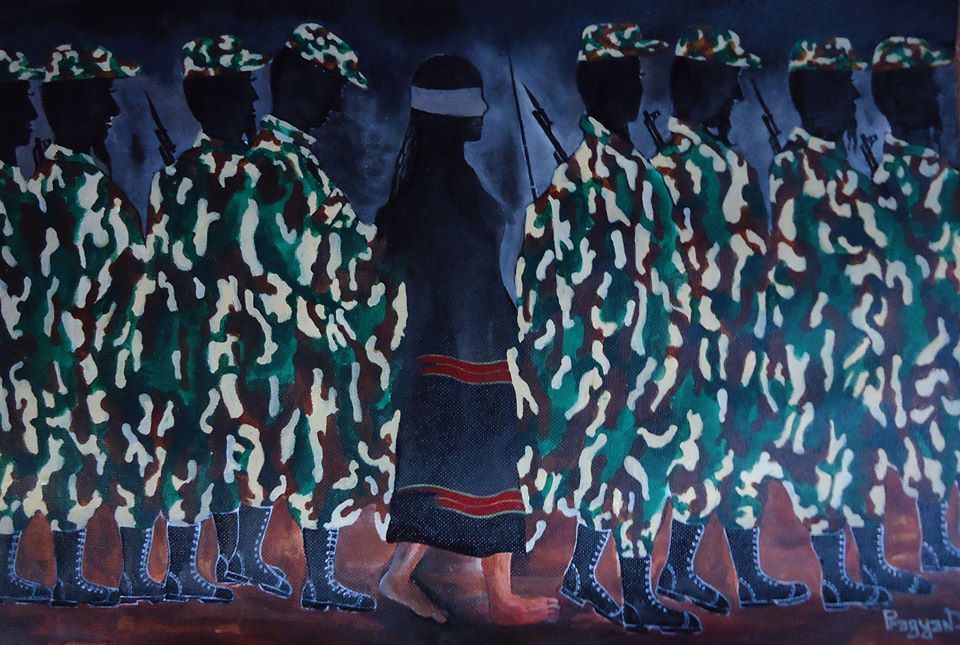
Kalpana Chakma was only two years older than me. We had a couple of things in common. We were born in the same country and we both kept personal diaries about our individual struggles in life. But that’s where the similarities in our lives ended. In the year 1996 as I was preparing for my A-level exams and arguing with my mother about my right to go out alone and wear the clothes of my choice, Kalpana was struggling against militarization, against a national suspicion of the ethnic ‘other’, against Government hypocrisy, against the militant-nationalism of the state of Bangladesh. In 12 June 1996 army officers abducted Kalpana Chakma in front of her two brothers, a sister-in-law and mother late at night from her home in Rangamati in the Chittagong Hill Tracts (CHT). 18 years on and many protests, meetings, roundtables, CID investigations and court appearances later, Kalpana Chakma still remains missing.

Read the rest of this entry »


Rumanas, and Why they Stay

July 6, 2011

Rumana Monzur Hema, Photo credit: UBC

Hana Shams Ahmed

[This article was published in the July 2011 issue of The Forum magazine, The Daily Star]

When Zobaida Nasreen called me up to tell me what had happened to Rumana, I was on a busy street in Dhanmondi and I thought I had heard her wrong. I kept asking her to repeat. She must be talking about someone else, I thought.
But she wasn’t.

It was Rumana Monzur Hema, one of my childhood friends with whom I had intermittent interactions after we grew up and finally reunited last year when her daughter was admitted to the same school as my son.

When I heard about what her husband did to her I was in disbelief and shock.

We had looked up to her as the girl who always came out either first or second in her class. She had come out First in her Masters finals from the International Relations department of Dhaka University and had started teaching right away. Last year she was elated when she won a scholarship to the University of British Columbia. She had been unsure whether to take her four-year-old daughter Anushe with her. In the end she decided to leave her daughter with her mother.

She never discussed what was going on between Sumon and her. He was a graduate engineer who was involved in some business, that’s all we knew.

And that’s why the brutality of the story along with the identity of the victim seemed overwhelmingly unbelievable.

Eyes gouged out. Nose bitten off. Lip bitten off. Dragged by the hair and attempted to be strangled. Saved by maids with an extra key to the room. Of course we presume that if a so-called ’emancipated’ woman is threatened with abuse, she would have the support mechanism to walk out of that marriage, that she would not care what her family and relatives or those meddlesome people in our society say, that if she is financially independent she did not have to worry about her and her children’s future.

All those assumptions and presumptions fell apart when we heard the sadistic brutality of what happened in Rumana’s room on June 5, 2011. Read the rest of this entry »

Fighting sexual harassment head-on

April 4, 2011

Photo: Amirul Rajiv

Hana Shams Ahmed
[This article was published in the 20th Anniversary special issue of The Daily Star in March 2011]

Sometimes a comment from a perfect stranger can have a profound effect on a person’s life. When I was about 13 years old one such comment was made over the phone to my parents. The caller was anonymous and told my father that if I continued to wear ‘western’ clothes in public I would be stripped of my clothes and paraded naked in public. When my mother told me about this caller, her tone never indicated that this was a wrong being done to me, that I should not let something like this bother me, and that they would protect me from such harassment. My father’s complete silence on the matter spoke louder than words. I remember having felt that I had brought shame to my family and my mother followed up by becoming more vigilant about the way I dressed outside. As part of the bhodro middle class, I was powerless to resist at that age. That was almost two decades ago.
Read the rest of this entry »


Multiple forms of discrimination experienced by indigenous women from the Chittagong Hill Tracts (CHT) within the nationalist framework

April 4, 2011

Hana Shams Ahmed
[This paper was presented at a consultation with the United Nations Special Rapporteur on Violence against Women Ms. Rashida Manjoo. The consultation was arranged by the Asia Pacific Forum on Women, Law and Development (APWLD) and Women’s Aid Organization (WAO) in Kuala Lumpur in January, 2011.]

Introduction

To understand the discrimination faced by indigenous women in the Chittagong Hill Tracts (CHT), it is very important to understand the geopolitical background of the CHT in the larger context of the Bangali Muslim majority of Bangladesh. Pahari women are among the most marginalized and vulnerable groups of people in Bangladeshi society. They live as quadruple minorities under present social and political institutions. In a patriarchal and male-dominated society, they are a gender minority. In a Muslim-dominated country they are a religious minority. In a nationalist, Bangali-dominated society they are an ethnic minority. Within their own patriarchal community they face marginalization, exploitation, and increasingly, violence. A strong political movement exists to resist these multiple marginalization, but it has not been able to create enough resonance within the wider political structure.

This paper looks at the various sources of discrimination and violence faced by the indigenous women living in the CHT and looks at how and why the indifference from the state and the majority civil society further detaches them from the mainstream women’s movement in Bangladesh. Society and the infusion of religion into societal norms already play a huge role in the discrimination and marginalization of the majority Bangali women. In a Muslim majority Bangali society, indigenous women have a further factor of violence against them. Discriminatory family laws, along with discriminatory national laws, add a new dimension and further marginalize women within their own communities. Militarization and the presence of Bangali settlers have been terrorizing Pahari women since the beginning of the insurgency. The insurgency is over but CHT still remains fully militarized and the politically motivated violence against women still continues.

The information for the paper was collected through secondary documents and a series of interviews with grass-roots level women activists in the CHT, activists involved with NGOs and Pahari political groups and Pahari men and women lawyers.

Read the rest of this entry »


Sexual harassment and our morals police

June 27, 2010

“A single woman is like molasses, ants will follow her wherever she is kept.”

— A lecherous landlord (the character played by Abul Hayat in the film Third Person Singular Number)

Nick Henderson

Hana Shams Ahmed

[The Daily Star, 19th Anniversary Special Issue, February 25, 2010]

AN interesting debate popped up around Mostafa Sarwar Farooki’s film “Third Person Singular Number” when it was released late last year. It began in a Bangla newspaper and poured onto the English blog Unheard Voices. The newspaper reported that students of a private university had held a human chain to protest obscenity in the film — among others, the discussion centred around the concept of “living together” not being acceptable in our society, a scene showing someone purchasing a contraceptive device, and questions about the “character” of the film’s protagonist Tisha because she was living with a man she was not married to. Read the rest of this entry »


Media Marketing of Beauty & Female Stereotypes

June 27, 2010

Photo: Hasan Ahmed

By Hana Shams Ahmed

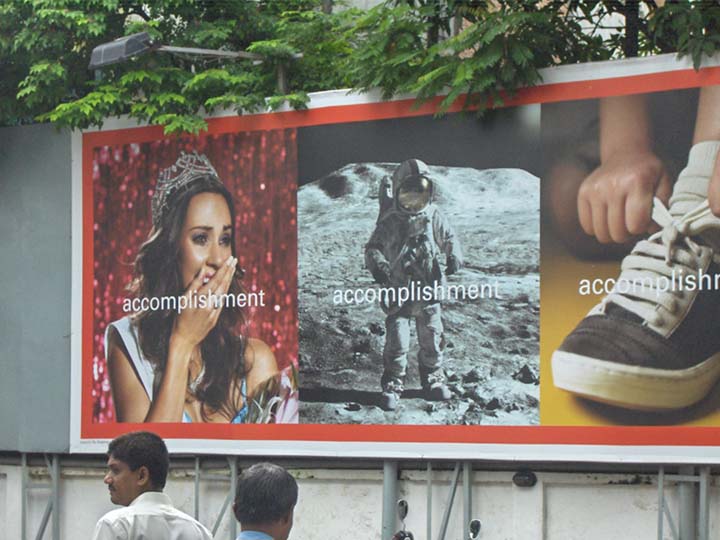
A bank’s billboard shows “achievement” as perceived by three groups – The child’s achievement is learning the skill of tying a shoelace, the man’s is taking his first step on the moon and finally the woman’s achievement is getting crowned in a beauty pageant. Read the rest of this entry »


The beautiful housewife and other stereotypes

June 27, 2010

Hana Shams Ahmed

Anwara Begum’s new book takes a look at women in the Bangladesh media. She argues that TV ads don’t only sell products but also attitudes and in the process set standards of beauty and mannerism, as defined by men. Hana Shams Ahmed reflects on the stereotyping of women.

[OneWorld South Asia, 8 October, 2009]

Dhaka: Dighi is the darling of the Bangladeshi media. She has long, beautiful hair and has just the right moves that will keep the viewers glued to the TV screen. There are life-size photos of her on big billboards in the city and big roles in films and drama serials already.

It was a commercial for a brand of henna that gave her the big break. In the ad, with a face full of pinkish makeup, she flaunts her translucent pearl-coloured hands exquisitely decorated with dark henna. Her on-screen friends gaze at her hands longingly, wishing they too could look like her.

Of course, this feeling is shared by thousand of girls who are on the other side of the television screen. Although Dighi’s hands look beautiful, one doubts whether that is what the viewers are focusing on.

The attention is clearly on what she represents. As Anwara Begum points out in her book, ‘Magical Shadows: Women in the Bangladesh Media’ (AH Development Publishing House, 2008), “TV ads don’t only sell products, they sell attitudes.” At an innocent age of 10 years, Dighi is the nation’s favourite child model. Read the rest of this entry »


Bangladesh’s Women Are In The House

June 27, 2010

By Hana Shams Ahmed

[Women’s Feature Services, May 26, 2009]

At a public meeting in Noakhali district in the Chittagong Division of Bangladesh, Agriculture Minister Motia Chowdhury had a strange encounter. Throughout the proceedings, a group of men stood with their backs toward her. The men, as it turned out, were conservative Muslim clerics, who found it difficult to accept a woman as a leader, but at the same time could not pass up the opportunity of listening to her speech.

Chowdhury is a leading woman politician in Bangladesh. Her involvement in politics goes back to Eden Girls’ College in Dhaka where she became vice president of the students’ union in 1963. She served a jail sentence for political activities in 1964-65 and actively participated in the liberation movement in 1971. In 1990, Chowdhury also actively took part in the movement against the rule of the Ershad junta, which ultimately ended an eight-year military rule. After democracy was restored in 1991, she was one of the few women to win a non-reserved seat in parliament. (In the original constitution, 15 seats were reserved for women. By 2004, this rose to 45 seats.) Chowdhury served as the Agriculture Minister in the Awami League (AL) government from 1996-2001. And is heading the same ministry in the recently elected AL government. Her feisty personality and determination to break barriers in a patriarchal political set-up has earned her the title ‘Agni Konna’ (daughter of fire). Read the rest of this entry »


We will not let them forget you

June 14, 2009
Artwork by Arif Haq

Artwork by Arif Haq

Hana Shams Ahmed

[THE DAILY STAR, 12 June  2009]

SHE was only 22 years old, a very vocal woman activist. An activist from a community that is treated by the Bangladesh state as second-class citizens. Someone who did not fear the most venerated institution in our country. A combination of all these elements made her a chillingly vulnerable person, a target for “The Vanishing” (i.e. those who are made to disappear without a trace).

Read the rest of this entry »


When It Also Happens At Home

May 27, 2009
Tanvir Murad Topu

Tanvir Murad Topu

Hana Shams Ahmed talks to Sara Hossain about domestic violence

[FORUM magazine, THE DAILY STAR, May 2009]

In December of last year, a case was brought to court by 33-year-old Dr. Humayra Abedin, with the help of human rights organisation Ain o Salish Kendra (ASK), against her own family, for confining her against her will.

She had come to Dhaka in August of that year after being told that her mother was seriously ill. As soon as she arrived home, her parents hid her passport and plane ticket and held her captive. She was forced to take mood stabilisers and anti-psychotic drugs until she confirmed that she would not be returning to the UK, and would give up her job and disassociate herself from everybody she knew there.

On November 14 she was allegedly forced to get married to someone against her will. There were repeated attempts on the part of her parents to not comply with court orders. They only responded after the court said it would hold them in contempt if they failed to show up. They kept claiming that Humayra was mentally ill therefore unable to appear.

After a fierce legal battle and after the High Court in England also passed orders requesting the co-operation of the Bangladesh judiciary and the authorities, her parents finally allowed Humayra to come to the Bangladesh High Court. Two judges interviewed Humayra in person and ordered her to be released and she immediately returned to the UK later that month.

Read the rest of this entry »


Breaking New Ground

May 27, 2009
Zaid Islam

Zaid Islam

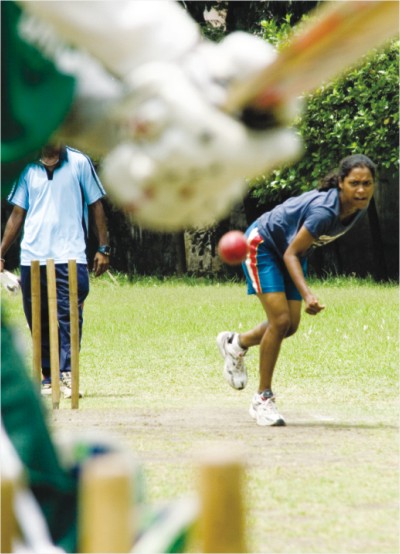
Hana Shams Ahmed and Quazi Zulquarnain Islam applaud the pioneering Bangladesh women’s cricket team

[FORUM magazine, THE DAILY STAR, May 2009]

In July 2004, Bangladesh Amateur Wrestling Federation (BAWF) postponed the first ever women’s wrestling competition, following threats from Islamist groups. One of the religious leaders, Mohiddin Khan said: “Female wrestling is nothing but showing off their bodies in front of male audience. This is totally immoral and against the teachings of Islam.”1

The event had been scheduled to take place at the Women’s Sports Complex. In October, members of the Islamic Shashantantra Andolon gathered in front of the National Sports Council to protest against the country’s first-ever women’s football tournament, clogging traffic in the area for three hours.2

In November of the same year, the Bangladesh government stopped women from taking part in a swimming competition in Chandpur, after a group that went by the name “The Committee for Resistance to Un-Islamic Activities” threatened large demonstrations if the competition was allowed to go ahead.3

Read the rest of this entry »


Take back the streets

April 15, 2009
hana_pcp1

Photo: Zahedul I Khan

Hana Shams Ahmed

[THE DAILY STAR, 11 April, 2009]

Pull up the hood of your rickshaw,” I heard for the hundredth time. It was a very nice day, with the wind blowing, and the sun making occasional appearances. But the hood of the rickshaw had to be put up. After all, I had to ‘hide’ myself from the numerous gawking eyes that always followed me throughout the journey from Mohammadpur to Elephant Road, where I went to study my A-levels.

Out of sight of my parents, I would always pull down the hood, and unfortunately pairs of eyes of all ages would look me up and down as if I was an exhibit in an art gallery. Then, depending on the vulgarity of the yelled comment, I would have to decide whether to keep the hood down, or give up and put it back up.

Read the rest of this entry »


The Parent Trap and Honour Crime

December 26, 2008

After a five-month ordeal in her home country of Bangladesh, 32-year-old doctor Humayra Abedin confirmed a forced marriage at the hands of her parents. But what does the incident reveal about Bangladeshi attitudes on domestic violence towards women?

humayra_daily_telegraphby Hana Shams Ahmed

[Altmuslim.com, December 22, 2008]

Humayra Abedin, the only child of Mohammed Joynal Abedin, a retired businessman, and his wife, a housewife, was trained as a doctor in Bangladesh. She went to England in 2002 to attend Leeds University, eventually moving to East London and working in hospitals across the capital as she studied to become a doctor. According to UK press reports, when her family found out that she had developed a close friendship with a Hindu Bangladeshi man in London, they were furious and since May of this year, they have desperately been trying to force her into a marriage with a Muslim man.

Read the rest of this entry »


Working in a Man’s World

September 22, 2008

[STAR Magazine, September 12, 2008]

A working woman is an epitome of self-sufficiency and equality. She is expected to have overcome the socio-cultural dynamics of the gender battle and earned a place for herself in a brutally disparate system. But the work environment for women is anything but fair, from supervisors who hold back women’s advancement, to colleagues who make harassment a constant presence at work. In the absence of a code of conduct at organisations, and no legal support, it has an extremely negative impact on women’s performance and future in the workplace.

Hana Shams Ahmed

Fahima* used to work in a local NGO. Her supervisor regularly directed verbal sexual innuendos towards her. After work he would ask her to come to his office on the excuse of ‘additional work’. He would then tell her stories with sexual connotations. Ignoring his advances only made matters worse — he started getting aggressive. When she could not bear it any more, she told her husband what was going on. But her husband, instead of helping her, accused her of “leading him on” and asked her to quit her job. Facing this double blow, she came to Bangladesh National Women’s Lawyer’s Association (BNWLA) to file a legal complaint against her supervisor. Unfortunately, social and family pressure pushed her to change her mind — she not only withdrew her case after a few days — she eventually resigned from her job. In the end, both her workplace harasser and her husband satisfied their male egos at the cost of Fahima’s career.

Read the rest of this entry »


Campus Violations

August 8, 2008


[Cover Image: Zahidul I Khan]

Sir asked me, “Do you have a boyfriend?”
Before I had time to react he said, “No? Well I don’t mind even if you do, you can still have an affair with me.”

I went into sir’s room with a friend to ask him if I could come in. He said, “How am I supposed to feel if I ask one guest to come and two guests come instead?”

I went to talk to sir, he asked me to seek his blessings for the impending exams in the traditional manner by touching his feet. When I went to do it, he put his arms around me and kissed me. I was so stunned, I did not know how to react. Read the rest of this entry »


Not Quite a ‘Hot Girl’

July 5, 2008

by Hana Shams Ahmed
[Star Magazine, July 4, 2008]

“What’s better than a hot girl?”
“Her twin sister!”

Aisharya Ray
[Photo: http://www.celebforyou.com]
This was the obnoxious tag line that ran for an international beauty pageant for twins recently televised live all across the world. ‘Stunning pairs’ walked down the ramp, while judges and spectators scrutinised every nook and cranny of their bodies to find that ‘perfect’ pair of twins. Read the rest of this entry »


Standing Up and Standing Out

March 7, 2008

Standing Up and Standing Out
by Hana Shams Ahmed
[Daily Star, March 7, 2008]


Begum Rokeya’s ‘Sultana’s Dream’ was an early work of fantasy fiction. But if any group of women have come close to achieving that state, it is the 18 lakh garment workers in the 4,500 factories all over the country. In a society where a woman’s first responsibility is always seen as the caretaker of the house and mother to her children, where her career is secondary to her husband’s, it is these garment workers who have at many homes become the sole providers for their families. In many cases, it is the husbands who do the family cooking because of the late work hours wives have at the factories.
Read the rest of this entry »


Waiting for Justice

May 25, 2007

by Hana Shams Ahmed
[Daily Star, May 25, 2007]


No one knows how Shaptorshi is spending her days without her mother’s care.

It was the eve of Eid-ul-Fitr in 2005. Nine-year-old Shaptorshi had just come back from Dhaka to celebrate the big festival at her dadi’s house in Barisal. After playing with her friends, Shaptorshi came home to eat iftari and was told that her mother Papia was not feeling well and was resting in a room upstairs. She decided to go to her uncle’s house next door to have iftari and then rushed to the rooftop with her friends. After catching a glimpse of the new moon she rushed home to share the excitement with her family. She never got to hug her mother though. Right after sighting the new moon Shaptorshi’s little world fell apart when she was told that her mother was no longer in this world. Read the rest of this entry »


Facing an uncertain future

November 24, 2006

by Hana Shams Ahmed
[Daily Star, November 24, 2006]


Mahmuda was a very ordinary teenager living in a small village in Nilphamari. The only thing that made her life different from many others was that her father died when she was very small, leaving her mother and her in a state of extreme poverty and helplessness. Mahmuda and her mother were forced to go back to her maternal grandfather’s house and live on whatever her uncles settled to spare for them. As young as she was, Mahmuda did not want to live on someone else’s money for the rest of her life. She thought she had the capability of earning a decent living on her own and was determined to go out and get it. A very brave decision for a girl so young! But the steps she took next would change her life forever. Read the rest of this entry »


Is this your new site? Log in to activate admin features and dismiss this message
Log In