We will not let them forget you

June 14, 2009
Artwork by Arif Haq

Artwork by Arif Haq

Hana Shams Ahmed

[THE DAILY STAR, 12 June  2009]

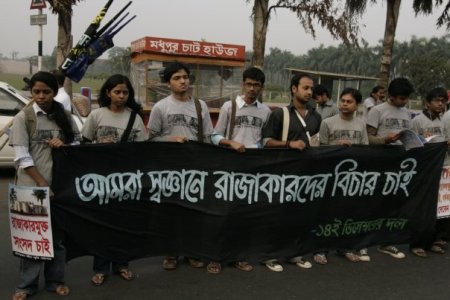
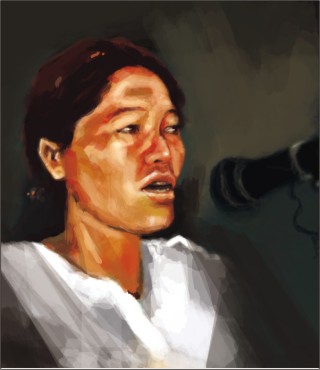
SHE was only 22 years old, a very vocal woman activist. An activist from a community that is treated by the Bangladesh state as second-class citizens. Someone who did not fear the most venerated institution in our country. A combination of all these elements made her a chillingly vulnerable person, a target for “The Vanishing” (i.e. those who are made to disappear without a trace).

Read the rest of this entry »


No Peace in the Hills Yet

May 29, 2009
Hana Shams Ahmed

Hana Shams Ahmed

It was the previous Awami League government in 1997 that signed the historic CHT Accord in 1997, promising to end 25 years of guerrilla war in the Chittagong Hill Tracts. Unfortunately the government-encouraged settlement of poor Bangalis into the area, started in the 1980s, has never stopped therefore destabilising the situation 11 years after the signing. Most of the key provisions of the accord remained unimplemented in the last decade. The newly elected AL government has clearly mentioned in its election manifesto that they will take steps to fully implement the Peace Accord.

Hana Shams Ahmed

[STAR magazine, THE DAILY STAR, February 27, 2009]
Chittagong’s face-lifted Shah Amanat International Airport boasts ceramic artwork of various tourism selling points of Bangladesh. One of them shows a group of quaint-looking Pahari girls doing a traditional dance. Next to it is another Pahari girl in a traditional pinon picking leaves from a hill in the Chittagong Hill Tracts. The depiction of Pahari girls as part of our cultural heritage has always been used to attract national and international tourists. Unfortunately how the common Pahari girls are living their lives seems to be hardly of concern. The Chittagong Hill Tracts is the only place in the entire country (except for the Cantonment areas) where the army still remains with nearly six brigades of approximately 35,000 army personnel.
Read the rest of this entry »


One big hurdle down

May 27, 2009
Zahedul I Khan

Zahedul I Khan

Hana Shams Ahmed

[THE DAILY STAR, May 19, 2009]

JUST like it took the rape of three women students at Jahangirnagar University (JU) to recognise what an extreme form sexual harassment had taken at the universities it took the suicide of Art College student Simi Banu to bring to mass consciousness the extreme forms “eve teasing” has now taken in this country. And until the defiant JU students took to the streets in 1998, the mere concept of “sexual harassment” in educational institutions was only spoken about in hushed tones among girl students at the university halls.

But now it’s finally here — institutional recognition of sexual harassment. 11 years after the JU case, and many hundreds of silenced and vocal cases in between, the High Court has directed the government to make a sexual harassment law based on the guidelines drawn up by lawyers and human rights activists.

Read the rest of this entry »


When It Also Happens At Home

May 27, 2009
Tanvir Murad Topu

Tanvir Murad Topu

Hana Shams Ahmed talks to Sara Hossain about domestic violence

[FORUM magazine, THE DAILY STAR, May 2009]

In December of last year, a case was brought to court by 33-year-old Dr. Humayra Abedin, with the help of human rights organisation Ain o Salish Kendra (ASK), against her own family, for confining her against her will.

She had come to Dhaka in August of that year after being told that her mother was seriously ill. As soon as she arrived home, her parents hid her passport and plane ticket and held her captive. She was forced to take mood stabilisers and anti-psychotic drugs until she confirmed that she would not be returning to the UK, and would give up her job and disassociate herself from everybody she knew there.

On November 14 she was allegedly forced to get married to someone against her will. There were repeated attempts on the part of her parents to not comply with court orders. They only responded after the court said it would hold them in contempt if they failed to show up. They kept claiming that Humayra was mentally ill therefore unable to appear.

After a fierce legal battle and after the High Court in England also passed orders requesting the co-operation of the Bangladesh judiciary and the authorities, her parents finally allowed Humayra to come to the Bangladesh High Court. Two judges interviewed Humayra in person and ordered her to be released and she immediately returned to the UK later that month.

Read the rest of this entry »


Breaking New Ground

May 27, 2009
Zaid Islam

Zaid Islam

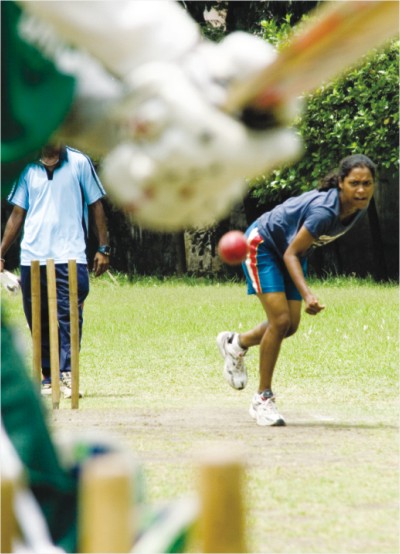
Hana Shams Ahmed and Quazi Zulquarnain Islam applaud the pioneering Bangladesh women’s cricket team

[FORUM magazine, THE DAILY STAR, May 2009]

In July 2004, Bangladesh Amateur Wrestling Federation (BAWF) postponed the first ever women’s wrestling competition, following threats from Islamist groups. One of the religious leaders, Mohiddin Khan said: “Female wrestling is nothing but showing off their bodies in front of male audience. This is totally immoral and against the teachings of Islam.”1

The event had been scheduled to take place at the Women’s Sports Complex. In October, members of the Islamic Shashantantra Andolon gathered in front of the National Sports Council to protest against the country’s first-ever women’s football tournament, clogging traffic in the area for three hours.2

In November of the same year, the Bangladesh government stopped women from taking part in a swimming competition in Chandpur, after a group that went by the name “The Committee for Resistance to Un-Islamic Activities” threatened large demonstrations if the competition was allowed to go ahead.3

Read the rest of this entry »


Who Will Speak for the BDR?

April 15, 2009

speak3

Hana Shams Ahmed highlights legitimate issues that disappeared in the massacre’s aftermath

[FORUM magazine, THE DAILY STAR, April 2009]

“The subaltern uprising story has paled away as threats to the nation’s territorial sovereignty have become clearer”. — Rahnuma Ahmed, New Internationalist (UK), March 17

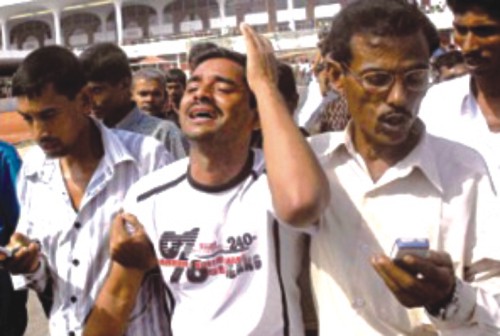
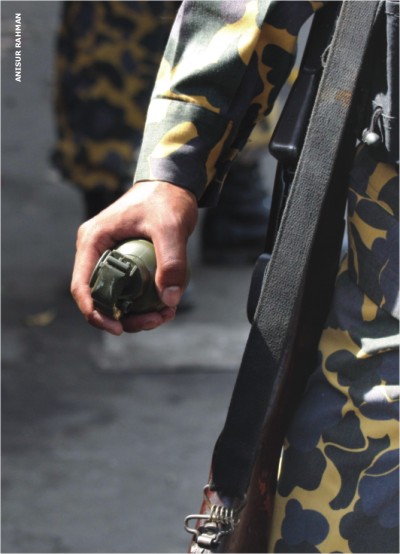
Six weeks into the bloody carnage at Pilkhana, black banners are still hanging outside the BDR grounds. This is the site where the bodies of 74 people, including 57 military officers, were recovered from mass graves– a political and emotional shock from which the nation is yet to recover.

Two of the most noted army officer victims were director general of BDR Maj Gen Shakil Ahmed and Col Gulzar Uddin Ahmed, the founding director of the intelligence wing of RAB (Rapid Action Battalion) who led the operation to arrest JMB militant leader Shaikh Abdur Rahman.

Public perception first focused on the initial reports on day one about a rebellion centred over pay, rations, corruption, and lack of opportunities. But by day two, public outcry broke out as reports about savage killings started coming out. The “Proletariat Revolution” theory had initially been facilitated by interviews with rebels in orange and red masks, expressing their pent-up resentment over low salaries and alleged corruption in the BDR upper-tier.

Read the rest of this entry »

Take back the streets

April 15, 2009
hana_pcp1

Photo: Zahedul I Khan

Hana Shams Ahmed

[THE DAILY STAR, 11 April, 2009]

Pull up the hood of your rickshaw,” I heard for the hundredth time. It was a very nice day, with the wind blowing, and the sun making occasional appearances. But the hood of the rickshaw had to be put up. After all, I had to ‘hide’ myself from the numerous gawking eyes that always followed me throughout the journey from Mohammadpur to Elephant Road, where I went to study my A-levels.

Out of sight of my parents, I would always pull down the hood, and unfortunately pairs of eyes of all ages would look me up and down as if I was an exhibit in an art gallery. Then, depending on the vulgarity of the yelled comment, I would have to decide whether to keep the hood down, or give up and put it back up.

Read the rest of this entry »


Migrant Workers: The Never-ending Tragedy

January 13, 2009
Sanjib Kumar Roy, Reuters

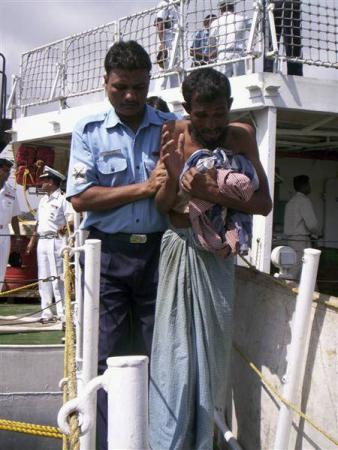
One of the survivors of the Andaman tragedy being helped by an Indian coastguard. (Photo: Sanjib Kumar Roy, Reuters)

Throughout 2008 we received reports about how poor men and women were swindled by recruiting agents in Bangladesh and left stranded in hostile foreign country environments. We saw employers in host countries, taking advantage of migrants’ ‘undocumented’ status to abuse their rights and cheat them of payment. When abused workers tried to protest, it led to ‘bad press’ for ‘Bangladeshi workers’ as a category, and many were sent back en masse. Some governments threatened to stop recruiting Bangladeshi workers altogether, leading to weak and ineffective diplomatic overtures from our side. While the latest press headline reports overseas remittances hitting a new high, the year 2008 ended with another tragedy. 300 Bangladeshi men headed for Malaysia drowned in the sea near the Andaman Islands.

Hana Shams Ahmed

[STAR magazine, 09 January, 2009]

According to press reports from Reuters, 412 men, mostly of Bangladeshi nationality, were promised jobs in Malaysia by unidentified recruiting agents. On 14 November these men, aged between 18 and 60, set sail on six motorised vehicles. At some point during their journey, the men changed vessels, according to an Indian coast guard statement. One survivor, identified as Mohammad Ismail Arafat, said he and others had paid a Bangladeshi agent for jobs in Malaysia. The boats they were travelling in did not have enough food in them and seven of the men died from starvation. After drifting around aimlessly for days, they finally spotted a lighthouse somewhere along the Andaman Islands. Hoping they would be able to swim ashore, the men jumped into the sea. Indian coast guard officials said a group of men were rescued from a small boat near Little Andaman Island, from the water. The Andaman and Nicobar Islands lie about 1,200km (750 miles) east of the Indian mainland. Coastguards finally rescued a total of 112 men. The remaining 300 men drowned at sea.

Read the rest of this entry »


Youth Boom and Possible Futures

January 5, 2009

Naeem Mohaiemen

Photo: Naeem Mohaiemen

Hana Shams Ahmed

[Published in ‘Our Common Future: South Asia’ by Liberal Youth South Asia, a network of liberal youth and youth organisations. November 2008]

In 2008, the results of Bangladesh’s Secondary School Certificate (SSC) exams had an all-time record pass percentage – 72 per cent – and the highest number of GPA-5 recipients ever. For a few years now, all these records are getting broken at every level of higher education. Beyond what it may mean for higher education, it keeps bringing to the media images of hundreds of thousands of young boys and girls in the streets – waving, clapping, celebrating – the shape of our exploding youth boom.

Read the rest of this entry »


Freeing Bangladesh from Extremism

December 26, 2008


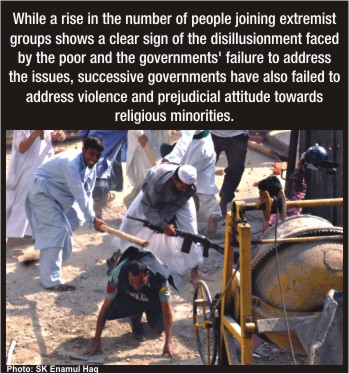
Terrorism has crossed transatlantic boundaries. The aggressive religious bigots now hold hostage international politics. Whoever may be pulling the strings, fanaticism has already perforated our borders and done much damage in the last few years. Whoever comes to power through this election, must tackle all extremist powers working within the country. To achieve that, the party in power itself must remove all communal elements from political activities.

Hana Shams Ahmed

[STAR magazine, 26 December, 2008]

per03

A Google search on The Daily Star’s website for ‘Sector Commander’s Forum’ (SCF) gives 87 results. Ever since its formation late last year, this group has been making media appearances (very well covered by the news reports, features and op-eds in DS) with two major demands — a trial of the 1971 war criminals and the barring of the known war criminals from taking part in the upcoming national elections. Very reasonable demands. After all isn’t it contradictory for a person who opposed the formation of the nation to sit in the parliament of that same nation?

Read the rest of this entry »


The Parent Trap and Honour Crime

December 26, 2008

After a five-month ordeal in her home country of Bangladesh, 32-year-old doctor Humayra Abedin confirmed a forced marriage at the hands of her parents. But what does the incident reveal about Bangladeshi attitudes on domestic violence towards women?

humayra_daily_telegraphby Hana Shams Ahmed

[Altmuslim.com, December 22, 2008]

Humayra Abedin, the only child of Mohammed Joynal Abedin, a retired businessman, and his wife, a housewife, was trained as a doctor in Bangladesh. She went to England in 2002 to attend Leeds University, eventually moving to East London and working in hospitals across the capital as she studied to become a doctor. According to UK press reports, when her family found out that she had developed a close friendship with a Hindu Bangladeshi man in London, they were furious and since May of this year, they have desperately been trying to force her into a marriage with a Muslim man.

Read the rest of this entry »


Working in a Man’s World

September 22, 2008

[STAR Magazine, September 12, 2008]

A working woman is an epitome of self-sufficiency and equality. She is expected to have overcome the socio-cultural dynamics of the gender battle and earned a place for herself in a brutally disparate system. But the work environment for women is anything but fair, from supervisors who hold back women’s advancement, to colleagues who make harassment a constant presence at work. In the absence of a code of conduct at organisations, and no legal support, it has an extremely negative impact on women’s performance and future in the workplace.

Hana Shams Ahmed

Fahima* used to work in a local NGO. Her supervisor regularly directed verbal sexual innuendos towards her. After work he would ask her to come to his office on the excuse of ‘additional work’. He would then tell her stories with sexual connotations. Ignoring his advances only made matters worse — he started getting aggressive. When she could not bear it any more, she told her husband what was going on. But her husband, instead of helping her, accused her of “leading him on” and asked her to quit her job. Facing this double blow, she came to Bangladesh National Women’s Lawyer’s Association (BNWLA) to file a legal complaint against her supervisor. Unfortunately, social and family pressure pushed her to change her mind — she not only withdrew her case after a few days — she eventually resigned from her job. In the end, both her workplace harasser and her husband satisfied their male egos at the cost of Fahima’s career.

Read the rest of this entry »


Sweatshop Tales

September 22, 2008

[STAR Magazine Special Feature, August 29, 2008]

Modern Kuwait represents all the glamour and opulence of an oil-rich country. Behind the glamour is the toil of the hundreds and thousands of migrant workers. Among them are 240,000 Bangladeshi workers many of whom are underpaid, work 7 days a week and live in appalling conditions defying all international labour laws. Too scared to complain to the authorities because their passports are held hostage by their employers, placed into shady work situations by a Bangladeshi manpower industry that is wildly unregulated and endemically corrupt, on July 28 the Pandora’s Box finally exploded.

Read the rest of this entry »


Campus Violations

August 8, 2008


[Cover Image: Zahidul I Khan]

Sir asked me, “Do you have a boyfriend?”
Before I had time to react he said, “No? Well I don’t mind even if you do, you can still have an affair with me.”

I went into sir’s room with a friend to ask him if I could come in. He said, “How am I supposed to feel if I ask one guest to come and two guests come instead?”

I went to talk to sir, he asked me to seek his blessings for the impending exams in the traditional manner by touching his feet. When I went to do it, he put his arms around me and kissed me. I was so stunned, I did not know how to react. Read the rest of this entry »


Not Quite a ‘Hot Girl’

July 5, 2008

by Hana Shams Ahmed
[Star Magazine, July 4, 2008]

“What’s better than a hot girl?”
“Her twin sister!”

Aisharya Ray
[Photo: http://www.celebforyou.com]
This was the obnoxious tag line that ran for an international beauty pageant for twins recently televised live all across the world. ‘Stunning pairs’ walked down the ramp, while judges and spectators scrutinised every nook and cranny of their bodies to find that ‘perfect’ pair of twins. Read the rest of this entry »


Scalding Wake-up Call

June 27, 2008


[Ratna with her mother at the hospital — her tongue, legs and buttocks bearing the marks from the torture endured at the home of Sylhet’s Chief Judicial Magistrate Rafiqul Alam.]

Fourteen-year-old Ratna who worked as a maid for the last 10 months reveals the horror stories of how she faced demonic torture by her employer, the wife of Sylhet’s Chief Judicial Magistrate. If this is the way his home is run, how can he administer justice in the courts? Read the rest of this entry »


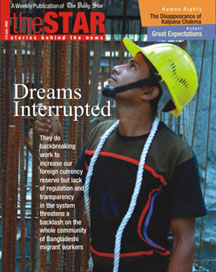
Dreams Interrupted

June 20, 2008


Read the rest of this entry »


Sara Hossain Interview

May 30, 2008

The Whole Nine Yards
[Daily Star, May 30, 2008]

Sara Hossain speaks to Hana Shams Ahmed about the state of human rights in various sectors of the country and the administration’s role in creating a congenial atmosphere where human rights can be ensured for every person. Read the rest of this entry »


What will happen after Sajek?

May 16, 2008

by Hana Shams Ahmed
[Daily Star, May 16, 2008]


A burnt down home of a Pahari victim in Sajek union

On April 20 an act of extreme violence took place across seven villages in Chittagong Hill Tracts — Nursery Para, Baibachara, Purba Para, Nangal Mura, Retkaba, Simana para and Gangaram Mukh — of Sajek union under Baghaichari upazila (sub-district) in Rangamati district. Houses of villagers were burnt to the ground in the darkness of the night. The houses belonged to both Paharis and Bangali settlers, although Pahari victims say the majority were Pahari houses. Bangali settlers say the opposite.

Read the rest of this entry »


Stolen Childhood

May 3, 2008

by Hana Shams Ahmed
[Daily Star, May 3, 2008]

Two weeks ago there was a shocking news report about the brutal murder of a 56-year-old writer. The 23-year-old murderer was a nephew of the woman, and reports allege that he was a drug addict and came to his aunt looking for money. When he was refused, he went ballistic and murdered her. The whole incident was witnessed from the beginning by one person– an eight-year-old girl, called Momota. News cameras caught her describing in gory detail every step of the murder, and finally the murderer running away and warning the girl of dire consequences if she spoke about it to anyone.

How is Momota related to anyone in the house? She’s not. She used to work as a ‘bandha’ (derogatory term for full-time employment) maidservant of the house. Read the rest of this entry »